
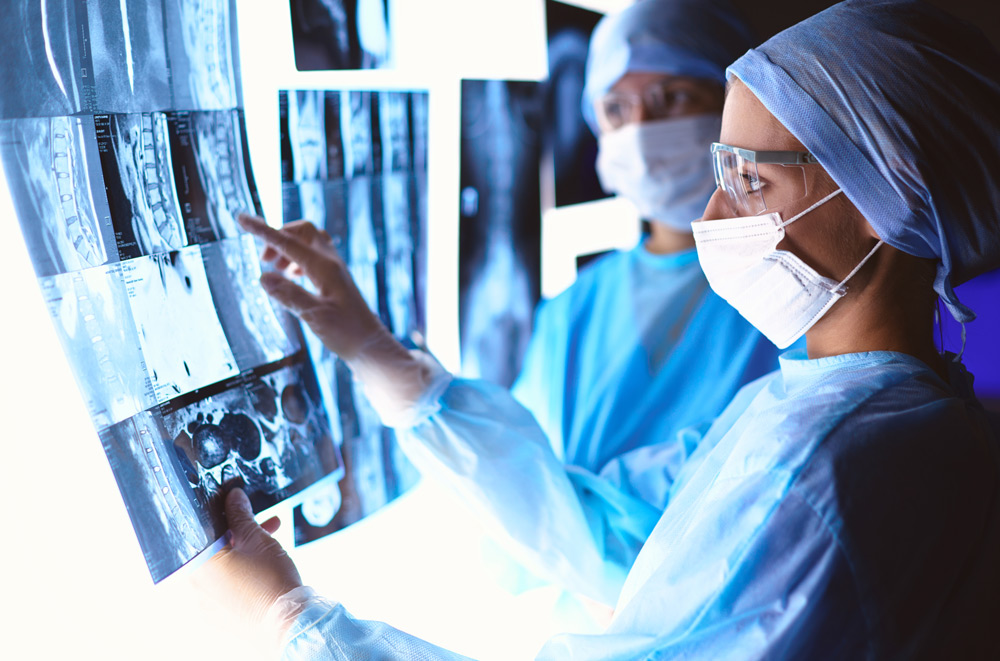
Cameron Diagnostics and Imaging in Angola, Indiana
Imaging and diagnostic services play a crucial role in the treatment of a variety of medical conditions. When you choose Cameron’s imaging center, you will find the same cutting-edge, modern equipment and technology with outstanding care from experienced, board-certified radiologists and staff.
Imaging and Diagnostic Services at Cameron
MRI
The acronym MRI stands for magnetic resonance imaging. During this diagnostic imaging technique, powerful magnets and radio waves capture images from inside the body, creating cross-sectional images of the body’s physiological processes and anatomy. This imaging technique allows doctors to diagnose diseases and conditions and to detect injuries all over the body.
Breast MRI
A breast MRI is used to scan breast tissue. This imaging technique is used to look for abnormalities in the breast and its surrounding tissue. Strong magnetic fields and radio waves capture images of the tissue in the breast. A breast MRI can assist doctors with diagnosing various diseases of the breast, monitoring breast tissue abnormalities, evaluating silicone breast implants and detecting malformations within the breast.
PET/CT
PET/CT stands for positron-emission tomography/computed tomography and is a type of nuclear-medicine imaging. It uses a radiotracer, a computer and a camera to capture 3D images from inside the body. This scan can show how the internal tissues and organs are functioning. Oncologists frequently use PET/CT scans to detect tumors and surveil cancer.
CT (CAT Scan)
CT stands for computed tomography and is an imaging technique that uses X-rays and a computer to create highly detailed 3D images of the bones, tissues and organs. Doctors can use this scan to look for abnormalities throughout the spine, to find internal injuries, to look for blood clots, to monitor heart disease and as a guide while performing certain procedures.
3D Mammography (3D Mammogram)
This imaging technique involves the use of X-rays to identify abnormalities in breast tissue. 3D mammograms capture cross-sectional images of the individual layers of tissue. Radiologists closely examine these images. 3D mammography is usually used for the detection of cancer.
Ultrasound
High-frequency sound waves are used to view real-time images of the inside of the body. During an ultrasound, the movement of the internal organs and blood can be seen. Unlike X-rays, an ultrasound does not require the patient to be exposed to ionizing radiation. Ultrasounds allow doctors to assess, diagnose, and treat medical conditions. In addition, ultrasounds are used to monitor the progression of a pregnancy and evaluate the fetus.
Nuclear Medicine
This is a type of therapeutic cancer treatment that uses radioactive drugs that bind with cancerous cells and demolish them. People who experience prostate cancer, meningiomas, lymphoma, thyroid cancer, and neuroendocrine tumors can benefit from nuclear medicine. This treatment has been proven to ease symptoms and extend patients’ lives.
Fluoroscopy
Fluoroscopy is an X-ray that displays internal tissues, organs, and other structures as they move in real time. This imaging technique shows the body in action. With fluoroscopy, doctors can evaluate the reproductive, cardiovascular, and digestive systems or prepare for another medical procedure that requires imaging.
DEXA Scan
DEXA stands for dual-energy X-ray absorptiometry. This scan is a bone-density test, which means that it measures the mineral content of certain bones in the body. Although a decrease in bone density is a common side effect of the natural aging process, patients with low bone mass and deteriorating bone tissue may have or be at risk for osteoporosis.
General Radiography (Traditional X-ray)
General radiography uses multiple X-rays scanning through the body to create an image. X-ray images are two-dimensional with varying shades of gray. The shade depends on the density of the tissue and the energy level of the X-ray. Thicker tissues will appear lighter (e.g., bone), while thinner tissues will appear much darker, nearly black (e.g., soft tissue of the neck).
Echocardiogram
The test uses sound waves that help to reconstruct the heart valves and the heart itself. This helps to analyze how your heart functions and can give insight into the size of certain areas of your heart. When combined with a stress test, it provides great information about how your heart functions under stress.
Cameron Breast Health Program
Cameron, in conjunction with the Indiana Breast Cancer Awareness Trust, is proud to offer an exclusive breast health program. Designed for women who are uninsured or underinsured, this program provides high-tech breast imaging services at Cameron Hospital’s Women’s Center.
Located within Cameron Hospital, the Women’s Center is a single destination for all breast imaging services, offering mammography and ultrasound in a comfortable and private setting. Diagnostic images are prepared while you wait, so you get the answers you need prior to leaving.
Frequently Asked Questions
Q: What are the different types of imaging?
A: Some of the most common imaging modalities include X-rays, CT scans, MRIs, PET scans, and ultrasounds. Each uses different technology and serves a specific purpose in diagnosing or monitoring medical conditions.
Q: What can I expect from a diagnostic imaging exam?
A: Depending on the type of exam you receive, the procedure may change, but it typically includes the following steps:
- Your doctor will provide specific instructions for preparing for the exam, which may include fasting, avoiding medications, or wearing comfortable clothing.
- You may need to remove any metal objects or accessories, as they could interfere with the images.
- During the exam, the technician will guide you on how to position yourself and what to do during the exam.
- The length of the exam varies depending on the type of imaging test you receive.
- It’s important to remain as still as possible during this process to ensure clear images.
- Afterwards, your images will be reviewed and discussed with your doctor, who will then follow up and explain the results, as well as any further care or treatment.
Q: What are the billing expectations?
A: Patients who have had imaging and diagnostic test(s) will receive two separate bills: one for the test itself and another for reading/reviewing the results. For additional financial information, visit Billing & Pricing.
Cameron Hospital
416 East Maumee Street
Angola, IN 46703
Schedule Appointment: 260-667-5128
Contact Our Office: 260-667-5136
Please enter through Cameron Hospital’s main entrance. Stop at the front desk to check-in or to be directed to our office.